
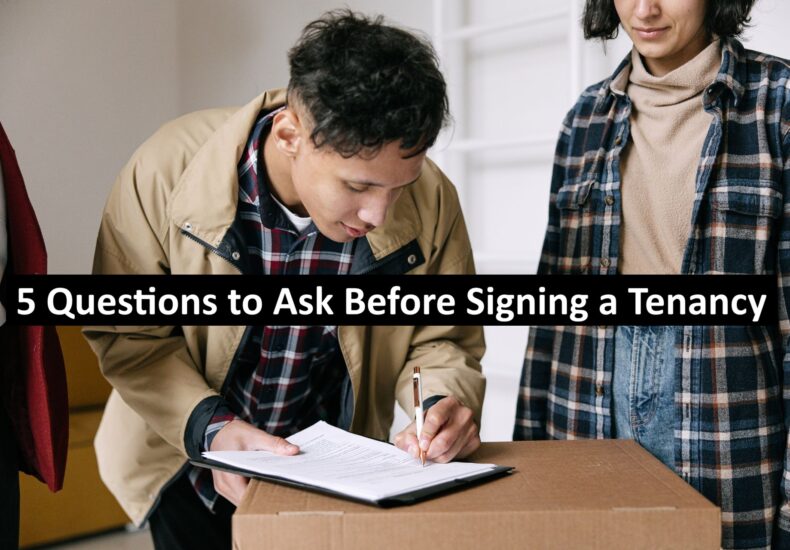
5 Questions to Ask Before Signing a Tenancy
In the excitement, and sometimes desperation, that comes with finding a new house or flat to rent, it’s easy to forget to ask your tenant or letting agency the important questions. When you don’t, you could find yourself facing unprecedented issues with your property or rental agreement further down the line. Unfortunately, it’s common for these circumstances to arise, especially with first-time renters who are less experienced with the renting process.
The promising news is, there are a number of legislations set out by the government that protect renters from unexpected charges and disruption after they move into the property. Moving into a new flat or house to rent should be something to look forward to, rather than fear. That’s why we’ve put together the ultimate guide for renters so that you can feel confident in asking the right questions at the right time.
Are there any added costs in the agreement?
Most letting agencies and tenants will be somewhat transparent with the month-to-month rental costs of the property. However, they may not be quite as clear on any additional costs on top of your monthly rent that you are required to pay. While added costs typically tend to be small, in some circumstances, you could be expected to pay more significant fees such as council tax and utility bills for water, gas and electricity usage.
As well as understanding the total sum of costs you’re required to make each month, its useful to be clear on any fees you could be hit with if you decide to change something within your agreement. Some tenants charge an early termination cost which you will need to pay if you want out of your agreement before your official tenancy finishes.
Read: How to Choose the Right Business Setup Consultant in Dubai
What deposit is required?
Almost every tenant or lettings agency will require you to make a deposit payment in order to secure your property. As a renter, you need to understand the government legislation around property deposits, so that you avoid paying unnecessarily high costs with no real promise that you will see it returned. By law, if you’re making a cash deposit, it cannot be greater than the sum of 5 weeks rent, so if your tenant is requesting a deposit greater than this amount, you have rights to only pay 5 weeks rent worth.
The exception is if your annual rent is higher than £50,000, in which case, the maximum deposit amount you can be expected to pay is 6 weeks work of your monthly rent instead. For holding deposits which are usually taken to reserve the property while reference checks are completed, you should only be asked to pay an amount that’s less than or equivalent to one week’s worth of rent.
Can you prove that the property is safe to live in?
Some rental properties will have what’s known as an inventory, which outlines and dates all of the previous conditions it has been in, including the state of fittings and furnishing. Before signing your tenancy agreement, you have rights to ask for the properties inventory, where you can check the full conditions of the property. If you are moving into a property that doesn’t have an inventory, you can simply make one yourself.
Start by taking photographs of each room and the conditions of the windows, walls, floor and ceiling. Once you move in, you could consider making your property more safe with security measures like CCTV. When it comes to property safety, as a renter, you are entitled to be provided with official documents and certificates that prove the properties compliance with safety regulations. You should ask your landlord for a copy of the following documents:
- Energy Performance Certificate (EPC)
- Electrical Installation Condition Report (EICR)
- Gas Safety Certificate (only applies in properties that have a supply of gas)
Is the property furnished or unfurnished?
It might sound obvious, but confirming if your property will be furnished or unfurnished can help you accurately forecast your budget, and how much you will need to spend on new furniture and household appliances. Some properties will be listed as ‘furnished’ but might be more sparse than you thought. Unfurnished properties tend to be listed with lower monthly costs, which looks great at first glance, but once you factor in moving expenses and what new furniture you need to buy, there may actually be little difference between the two prices. It’s helpful to opt for furnished properties if your renting contract is shorter-term, ideally 6-12 months, or if you’re looking for a quick and stress-free move in.
Many renters prefer to use existing or newly bought furniture if they’re planning on living there for a longer period of time and also because there less risk of being charged for damaging the landlord’s furniture. Whether you decide to choose a furnished or unfurnished property, you can still very much make it feel like your own. It’s important to check with your landlord over what you’re allowed to do and change with the property. If you happen to transform the entire place or choose to do nothing at all, you can easily make the property feel like a home with your own personal touch, like photo frames, cushions and indoor greenery.